Showing posts with label Fantasy. Show all posts

Tuesday, October 15, 2013

{A Kelly Coffee Review} The Name of the Wind by Patrick Rothfuss

Title: The Name of the Wind
Author: Patrick Rothfuss
Series: The Kingkiller Chronicles #1
Genre: Fantasy
Publisher: DAW


Synopsis:

"My name is Kvothe. I have stolen princesses back from sleeping barrow kings. I have burned down the town of Trebon. I have spent the night with Felurian and left with both my sanity and my life. I was expelled from the University at a younger age than most people are allowed in. I tread paths by moonlight that others fear to speak of during the day. I have talked to Gods, loved women and written songs that make the minstrels weep. You may have heard of me."

So begins a tale unequaled in fantasy literature - the story of a hero told in his own voice. It is a tale of sorrow, a tale of survival, a tale of one man's search for meaning in his universe, and how that search, and the indomitable will that drove it, gave birth to a legend.


I stumbled across this book while looking for something for my husband and I to listen to in the car (that was essentially kid-friendly for my way too bright three year old), that neither of us were at different places in. We've got a couple of series we're both reading but were in different places in them. We had a ten-hour drive ahead of us, so we wanted something that was about twenty hours. And I stumbled across The Name of the Wind.

The reviews for the quality of the audiobook itself were excellent--the narration was fantastic. I also have to admit being swayed by a quote from Game of Thrones author, George R. R. Martin: "he's bloody good, this Rothfuss guy."

Okay, so the audiobook is twenty-seven hours, not twenty. Still, I agree with Martin's assessment. The worldbuilding in this book is phenomenal. I just adored it. The setting, the magical system, the width and breadth of the cultures--everything feels so real. There's history, things lost, things forgotten, the world feels complete. I want to know more. I'm currently beating down my own tendency towards spoilers. This is a rare occasion in which I just want to read.

It's a different take--the infamous hero's tale from his own mouth. And Kvothe as a narrator is charismatic, magnetic, incredibly compelling. There's humor, tragedy, a real sense of the fragility of life and the emotions associated with loss and poverty. It's also great fun to hear the true stories of what come to be infamous tales.

Not only is the world a masterclass example of worldbuilding, and the narration fantastic, the character building is done with equal skill. Characters long dead you feel like you could know, they're just that well built. I think the synopsis covers the greater part of Kvothe's life, whereas The Name of the Wind really covers from ages 8 to 16-ish, childhood to the cusp of adulthood, when he begins to gain infamy. This allows school-age antics with a group of close friends to provide some levity in what can otherwise be a dramatic and tragic story.

And on top of all of that is the prose--the language. This is literature. The prose can bounce from playful to heart-wrenching, from satire and sarcasm to statements that seem like profound truths.

"Remember this son, if you forget everything else: A poet is a musician who can't sing. Words have to find a man's mind before they can touch his heart. And, some men's minds are woeful small targets. Music touches their hearts directly, no matter how small or stubborn the mind of the man who listens.”

There is a care and a craft to the storytelling as a whole that is deeper than anything I've read in a good long time. And, it's something I strongly feel will last the test of time. As much as I enjoy contemporary fiction--even contemporary paranormal, I think a lot of fantasy has a longevity much greater because it doesn't involve modern element which can be so quickly outdated. The Name of the Wind, I feel, could definitely become a piece of classic fantasy literature.

So, go read it. It's awesome. I've got some other books on my plate before I can read the second and the third will hopefully be sometime in 2014. I can't wait.

Also, given the time period that most of this book covers, it almost counts as YA and it's pretty clean in terms of language and sex.

"Words are pale shadows of forgotten names. As names have power, words have power. Words can light fires in the minds of men. Words can wring tears from the hardest hearts. There are seven words that will make a woman love you. There are ten words that will break a strong man’s will. But a word is nothing but a painting of a fire. A name is the fire itself.”


Saturday, July 27, 2013

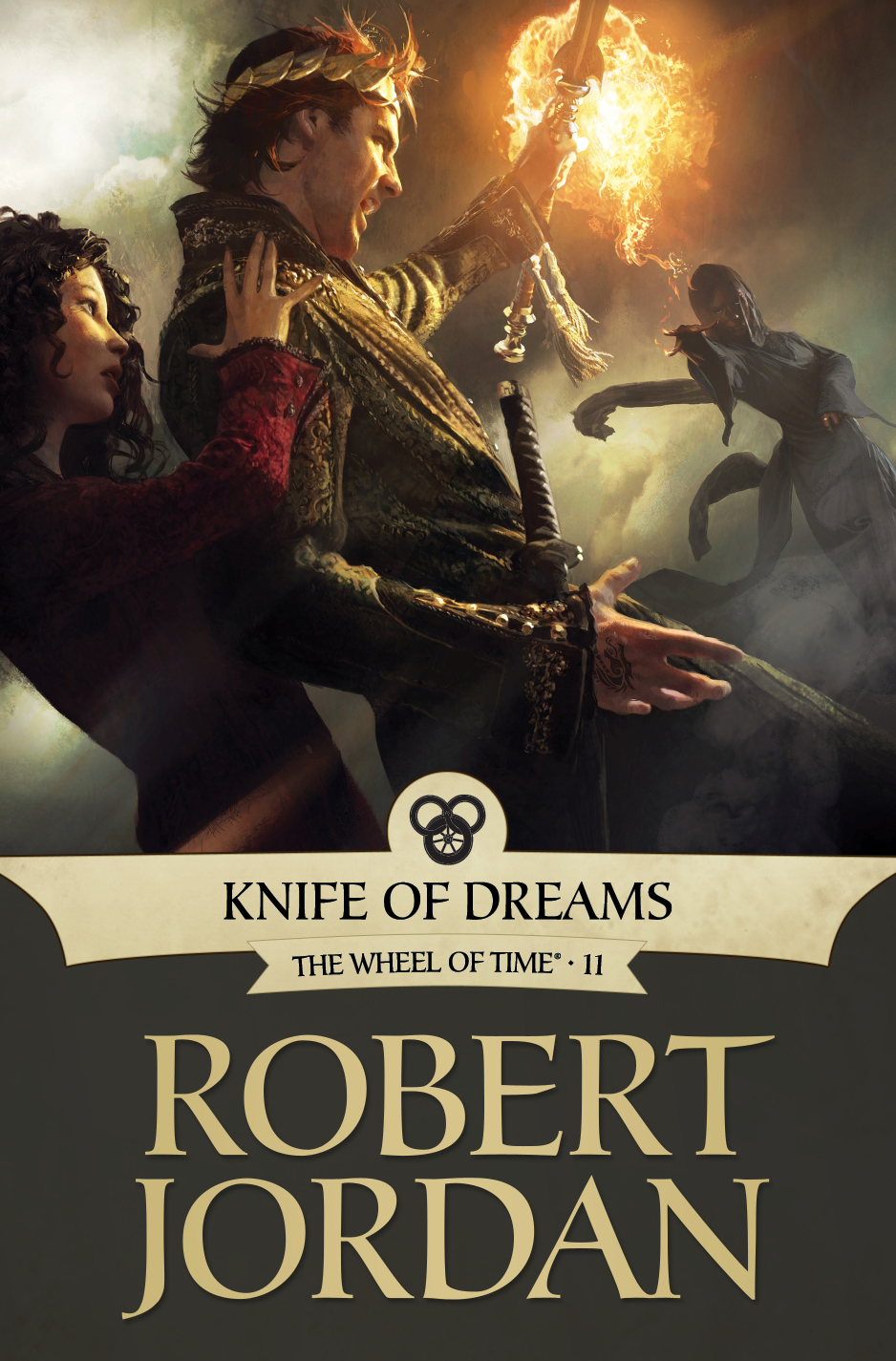
{Series Sunday} The Wheel of Time Series by Robert Jordan


Series: The Wheel of Time Series
Author: Robert Jordan (Completed by Brandon Sanderson)
Genre: Epic Fantasy
Publisher: Tor Fantasy
The Unofficial Website for WoT lovers


Synopsis: (borrowed from Dragonmount.com because I couldn't break it down this concisely).

Robert Jordan's Wheel of Time is a story that takes place both in our past and our future. In his fantasy world, the Dark One, the embodiment of pure evil, is breaking free from his prison. The overall plot is about a man who learns that he is the reincarnation of the world's messiah and is once again destined to save the world from the Dark One -- but possibly destroy it in the process. This saga is not only his story, but the story of an entire world's struggle to deal with war and change, destruction and hope. The Wheel of Time turns and Ages come and go. What was, what will be, and what is, may yet fall under the Shadow.

May the Dragon ride again on the winds of time.

So, the reason I've been very quiet for the last two months is because I've been buried in the Wheel of Time. A friend first recommended the series to me years ago, but I didn't realize that while the series may be called The Wheel of Time, not a single book is and couldn't remember who the author was well enough to look it up. But I kept the recommendation in the back of my mind for years. My husband has been reading them for years and when I finally decided that I could probably listen to audiobooks and still do work, I decided to dive into something that I otherwise would not have likely found the time to read.

If you're a fantasy lover and you haven't heard of this series, I'd be surprised. I'd be much less surprised if you haven't read it, for a couple reasons. Number one: probably one of the biggest claims to fame WoT has is its sheer length. Fourteen full-length novels averaging about 300,000 words per novel (by comparison, your average YA is between 40-60,000) plus a bonus prequel which is just shy of 125k (still twice the length of the average YA book). All fifteen books together are over 11 THOUSAND pages. Let's face it, even for those of us who love reading, that can be intimidating. Number two: it took 23 years for the full series to be published, and was in serious jeopardy of being completed when the author died in 2007 (thus the "completed by Brandon Sanderson" note at the top).
 

First question and probably the most important: is it worth reading?

My answer: yes. Emphatically, yes. It is well-worth reading. It is epic fantasy noted for its length, the complexity of the world, its magic system and its massive cast of characters. These books are very compelling. I found myself thinking about them, wondering about them, when I wasn't reading/listening. I wondered what would happen next, how people would change, how people would interact, who was good, who was bad? I had started two other books and figured I would continue to read those when at home and just listen to WoT at work (and on my nice lengthy commutes). Didn't happen. I was so compelled by this world and these characters that the other books I'd been reading took almost instantaneous backseats. They could not compete for my attention. And because my husband has read them, I could come home and switch from the audiobook to the print.

So, what's so awesome about it? Number one, I'd have to say, is the worldbuilding. There are a serious amount of people and cultures and countries running around in these books, but I think the thing that struck me the most was that--although there are about twelve or thirteen different countries/cultures we get to see, not only are they well-developed in their own rights, but nothing is picked up solidly from the world we know. I find a lot of fantasy either nearly copy earth cultures or at least borrow heavily from them. Tamora Pierce's Protector of the Small series almost straight up copies the Japanese with the Yamani Islands. In WoT though, I only once felt like these cultures or nationalities had direct ties to anything in the real world. The Tinkers with their bright clothing and nomadic ways of traveling in wagon caravans reminded me heavily of traditional gypsy stereotypes, but they were the closest ones. The Aiel, red and sun-haired, tall and light-eyed, are a desert warrior culture. Illianers have beards but their upper lips shaved and talk like pirates, "I do be thinking...". Arafellin men wear their hair in braids with bells. The women are known for being alluring and dressing in scandalously deep-plunging dresses which are barely opaque and being fierce bargainers.

Something I found particularly interesting is the fact there is a surprisingly strong social equality between men and women and strong female characters abound throughout the series. There's even a very good reason for why there so little social inequality between men and women--the major political force in the world for the past 3,000 years has been the White Tower, ruled by the Aes Sedai (EYEZ seh-DEYE)--the all-female magic users of the One Power. They are advisers and mediators to the rulers of the world and are often considered the forces behind the thrones, pulling strings and making the rulers of the world dance to their tune.

"An Aes Sedai never lies, but the truth she speaks may not be the truth you think you hear."

Anyway, it was a nuance that I found both intriguing and refreshing. If anything, there was a vague overtone of women, in general, being considered more competent in the matters of being in charge than men. In either case, the series is written largely in third person limited from a lot of different characters' perspectives, so there is a fairly amusing vein of "because you know that men gossip and can't be trusted to keep anything quiet" from female characters and exactly the reverse sentiment from some of the male.

"Never prod at a woman unless you must. She will kill you faster than a man and for less reason, even if she weeps over it after."

"Most women will shrug off what a man would kill you for, and kill you for what a man would shrug off."

"If the world is ending, a woman will take time to tell a man something he's done wrong."

 All right, so the world-building and the culture-building are excellent. The overarching plot--the Dark One is breaking free from his prison and the Chosen One (Dragon Reborn in the WoT's case), must defeat him at Tarmon Gai'don (which if you say really fast is very similar to Armageddon) is pretty basic. So, why does it take 11,000 pages? And what makes slogging through them worth it?

First, all that worldbuilding takes time. Second, although Rand (the Dragon Reborn) is ostensibly the main character, there are actually several other main characters running around and what they do is basically as important in the long run. The series covers about two years from beginning to end (prequel notwithstanding), and all three of the main characters (Rand, Perrin and Mat) go through tremendous change and growth over the course of that.

Which brings me to the second reason to read the series: the characters. There are so many characters worth reading about and following through the series, you just want to see them all. I can't give much in the way of examples without serious spoilers, but I think it's fair to say that pretty much everyone takes incredible journeys throughout the series. Characters are really a make-or-break thing for me and if I hadn't loved the characters so much, I wouldn't have gotten through it, no matter how fascinating I found the world. I was surprised to find a character that I initially wanted to throttle turning into one of my favorites. My feelings about a number of characters changed over the course of the series, both as they changed and in variation of how other characters viewed them. The characters, on the whole, are very real and multifaceted. There aren't a lot of stereotypes or filler characters in here--they all feel much more real than that.

All of this gushing having been said, there are some things that irk me a little about the series. One is that Rand's character arc goes through some really rough patches and he makes a lot of bad decisions. There's a reason for it, and it's a very good reason, but it still meant that there were four books in which I could barely tolerate reading about him. He eventually sorts it out, but it takes a while. I fell in love with him again, by the end, but it was rough going there in the middle. Fortunately, Mat, Perrin and a few others were enough to motivate me through the rough patches.

The second is something that is a person irk and I think other readers could really enjoy. WoT
gives you glimpses of the bad guys. You don't spend nearly as much time with them as with the good guys, really touches here and there, but for me, I don't care about them enough to want to see what they're doing behind the scenes. Most of the time, it's information for information's sake, allowing the reader to see the whole picture and fleshing out the bad guys more. One thing these chapters do is more-or-less eliminate bad guy monologue-ing (since you actually get to see what's going on with them and their interactions, they don't need to monologue to explain themselves). For a lot of them, it establishes that they're total sociopaths, if not psychopaths, and honestly, I couldn't care less about most of them. I'm not particularly a fan of reading about them doing terrible things either. I got to the point where I realized I was reading about one of them and just wanted to skip. On the whole, I don't think that much would have been lost without these chapters (plot-wise, you wouldn't have gotten near the character development of the baddies without them), but I do think a lot of others would enjoy them.

In the same vein, a particular trope I see in fiction that irritates me is dreaming. And it is used a lot in the WoT. I like things to be explained and vague dreams or symbols or, Light forbid (to use WoT lingo), metaphorical foretelling dreams aggravate me. I found the recurring dreams the boys share in the first few books particularly annoying. As the significance of the World of Dreams is built up in the books and the characters are in control there, I didn't mind it. But at the beginning, I was getting a little twitchy about dream sequences.

The two things that made me kind of nutty may be particular to me. While I'm actually really good with a large cast (and the number of characters in WoT is staggering, there are probably twelve arguably "main" characters, and the supporting cast is similarly massive), but there are a lot of characters running around that have similar names. Myrelle, Merilille, Faolain, Falion, Saerin and Seonid (those two were particularly bad because they interact a lot) are just a couple of examples. It would not be so bad, except I mostly "read" the books by listening to them, and since I couldn't see the spelling differences, and they're very similar, they could start getting mixed up. All of the main characters have pretty unique names, so there wasn't any worry with those, but there are so many side characters running around that such similar names could be irritating. The second is, I'm sure, a particular pet peeve of mine since I'm a linguistics junkie, but I hate it when authors use apostrophes to make things look foreign. I also don't like it when you make up words and there is no logic to their pronunciation--this is not to say you can't make up words, just if you're going to make them up, have a logic to their pronunciation with respect to their spelling. I could rant, I won't. But Domani and damane are pronounced so similarly as to be nearly indistinguishable from one another when spoken, which caused me a bit of confusion at places. 


Two further notes about this series. The first is that it reads like one enormous book. Having read it straight through, it really, really felt like one large story. I cannot imagine picking up any of the middle books and having even the vaguest idea of what was going on. The first two have plots that sort of stand on their own, but aside from that, it's all part of the big plan. I laughed with my husband that we found most of the titles more-or-less meaningless. The second is that the author did die before the series was completed. Brandon Sanderson finished off the last 3 (it was supposed to be 1, but no publisher would let you put out a 3,000 page book, so it got broken into 3), so the writing changes a bit. I liked Brandon Sanderson already, so I was quite happy, and I think he did a more than respectable job, but the feel of the last three is notably different. They move much faster on the whole and, I found, there's a stronger sense of humor in them. Given that they're the lead up to the final battle, I think the levity is warranted, but I distinctly remember laughing a lot more (or trying not to bust out laughing) over the last few books. Or at least the first two of the final three. The last book is, in effect, one very long, very big battle. And characters die. Fewer than I honestly expected would, but it is epic fantasy and not everyone gets to walk out with a happy ending. The other bummer is that there's no more. I'm a little heartbroken to be done with it because I know there isn't anymore to this series, this world. There is so much that we could still see and we probably won't get to. Sanderson finished the last three with extensive notes and the help of Jordan's editor/wife, but has stated that to expand into places Jordan didn't leave much specifics on would be exploiting the series. I disagree, because I think being able to have more of this series isn't exploiting it, as long as you working to do it justice and you're doing it for the fans. But it's fair to say there probably won't be much, if anything, else.

I suppose it's worth noting that I started with the prequel novel, which takes place about 20 years before the main story. I loved it and thought it was a fascinating introduction to the world and to characters I would grow to love, but I've read that a lot of people didn't care for it. I think that's because if you read it partway through or after the main series, it's kind of fluff. For me, it was a great hook into the world.

I would definitely recommend the audiobooks because Kate Reading and Michael Kramer were awesome.

So, in conclusion--excellent series. It could be used as a master course on world-building, it's so intricate and well-developed. However, the length of it means it's not for everyone. I recognize that. The audiobooks are 461 hours. That's nineteen full days. So, this series requires a serious time investment. Do I think it's worth it? Yes. The complexity of the world, the depth of the characters, the scope of the overall plot are well worth it. It's a surprisingly clean read, in the vein of traditional fantasy, with all of the sex off screen, its own system of obscenities and relatively little graphic violence makes it accessible to just about any audience. And beware if you get started, because I don't know that you're stopping until you get through it all.

The Wheel of Time turns, and Ages come and pass, leaving memories that become legend. Legend fades to myth, and even myth is long forgotten when the Age that gave it birth comes again.

Books in the Series:

0. New Spring
1. The Eye of the World
2. The Great Hunt
3. The Dragon Reborn
4.The Shadow Rising
5. The Fires of Heaven
6. The Lord of Chaos
7. A Crown of Swords
8. The Path of Daggers
9. Winter's Heart
10.Crossroads of Twilight
11. Knife of Dreams
12. The Gathering Storm
13. Towers of Midnight
14. A Memory of Light


Note: Most of the images used in this post are for the new ebook covers because I think the print covers are horrible, A Memory of Light notwithstanding. If there ever was an example of "Don't judge a book but its cover..."
 

Sunday, May 12, 2013

{Series Sunday} Mistborn Series by Brandon Sanderson


Series: Mistborn Series
Author: Brandon Sanderson
Genre: Fantasy/Adventure
Publisher: Tor Fantasy
Website


Synopsis:

In a world with a red sun, brown plants and ash that falls endlessly from the sky, the Lord Ruler is the supreme god and authority. Humans are divided into two classes--the nobility and the skaa--the servants/slaves, barely considered sentient by the nobility, much less human. But there are rebels among the skaa, and the nobility have long availed themselves of skaa women, allowing mistings--a nickname for magic users with the ability to burn metals to various effects--to be born among the skaa.

But the skaa are more intelligent than credited, and they seek to overthrow the Lord Ruler. Lead by Kelsier, a charismatic mistborn--an allomancer able to burn all of the magically charged metals--his crew of misting thieves, and the distrusting, orphaned mistborn Vin will make a move against their god-king and deal with prophecies, undiscovered magics and forgotten history.

Mistborn is an epic fantasy trilogy and a heist story of political intrigue, surprises and magical martial-arts action. The saga dares to turn a genre on its head by asking a simple question: What if the hero of prophecy fails? What kind of world results when the Dark Lord is in charge?


I finished Mistborn, the first of this trilogy a few months ago--then got side tracked by real life. But I saved the review because I knew as soon as I finished the first one, that I would finish this series. Unfortunately, in the vein of most epic fantasy, it's a long series, so finding the time to read the nearly 1500 pages of the following two books was a little tricky. Enter vacation.


Now, as far as series go, this one is only a trilogy with a stand alone fourth book that takes place several hundred years after the trilogy. At least for now. However, I thought it was best to pump this as one big piece.

It's my first time reading Brandon Sanderson, but I promise, it won't be the last. He builds such fascinating worlds and, more impressively, extremely original magic systems. I didn't quite realize how much fluff I'd been reading lately until diving into this (not that fluff doesn't have it's place...) but: Complex world, complex politics, complex magic, an ensemble cast, multiple plot lines and serious plot twists-- I'm in love. 

And did I mention the characters? I loved the characters. From Kelsier's refusal to be crushed, insisting on laughing in a world where skaa have nothing to laugh about to Vin's initial distrust and insecurity and watching her come into her own. I actually just really adored Vin, period. She's something of an atypical female character--powerful and decisive--while she does have doubts, she doesn't really linger on them. Once Vin comes to a decision, she rarely second-guesses it. It was a nice change of pace. 

I really enjoyed the depth of both the world building--the history, the cultures, the actual logic and plausibility of the world and its development. It pulled me in. And there's an ambiance to the setting, the world where green plants are a strange idea and the mists at night seem to be a living thing. Usually setting is sort of a side benefit for me, but in this case, it was really a shining star all its own.

And the magic. I loved the intricacy of the system and the originality. Mistborn have the ability to push themselves off of metals or use metals to pull themselves forward. A skilled mistborn can effectively fly, but there are very physics-related ideas behind their use. Yet the magic is still magic. It does make for some fantastic, almost Matrix-esque fight scenes. 

And these books have twists and turns. There were several plot twists that I did not see coming. But they weren't twists that made me feel cheated--I feel like the disclaimers and clues are clear in retrospect. 

I won't lie, this is a dense, traditional epic fantasy. They're long books but they are so worth it. I'm about a hundred pages into the fourth book, so I'll follow up with a review on that. But, regardless of how it turns out--look into this trilogy.


"Our best efforts were never even a mild annoyance to the Lord Ruler."

"Ah, but being an annoyance is something that I am very good at. In fact, I'm far more than just a 'mild' annoyance--people tell me I can be downright frustrating. Might as well use this talent for the cause of good, eh?”

--Marsh and Kelsier, Mistborn
Books in the series: 

1) Mistborn
2) The Well of Ascension
3) The Hero of Ages

4) The Alloy of Law


Tuesday, May 7, 2013

{A Kelly Coffee Review} Greenwode by J Tullos Hennig


Title: Greenwode
Autor:J Tullos Hennig
Series: Book One of The Wode
Genre: Historical, High Fantasy, slash
Publisher: Dreamspinner Press


Synopsis:
The Hooded One. The one to breathe the dark and light and dusk between….

When an old druid foresees this harbinger of chaos, he also sees whom it will claim: young Rob of Loxley. Rob’s mother and father, a yeoman forester and a wisewoman, have raised Rob and his sister, Marion, under a solemn duty: to take their parents’ places in the Old Religion as the manifestations of the Horned Lord and the Lady Huntress.

But when Gamelyn Boundys, son of a powerful nobleman, is injured in the forest, he and Rob begin a friendship that challenges both duty and ideology: Gamelyn is a devout follower of the Catholic Church. Rob understands the divide between peasant and noble all too well. And the old druid has foreseen that Gamelyn is destined to be Rob’s sworn enemy—to fight in a blood sacrifice for the greenwode's Maiden.

In a risky bid for happiness, Rob dares the Horned Lord to reinterpret the ancient rites—to allow Rob to take Gamelyn as a lover instead of a rival. But in the eyes of Gamelyn’s church, lust is a sin—and sodomy is unthinkable.


Disclaimer: This is an adult gay romance novel. That means sex between men. Don't like don't read--though in this case it would be a crying shame to pass the book up.

There is so much good about this book I'm not even sure where to start. First, I'm an old fantasy nerd, and Robin Hood hits it hard. This retelling is fantastic, in both the original meaning of the word and in the awesome meaning of the word.

Let's start with the basics: the language. A minor pet peeve of mine is historical novels where everyone speaks modern English. It just sort of hinders my willing suspension of disbelief. Hennig crafts a world where I can hear the accents in the voices--the variety between the low and high born. There are touches of French, Latin and Gaelic (I think, may be Welsh, I don't remember that it's specifically named), but their use is historically accurate and lends such depth to the world.

The myth maintained: I actually took a class that focused 1/3 of the semester on Robin Hood, so reading this story, seeing where the author has pulled from some of the oldest ballads and woven in all of the key components and characteristics of Robin Hood, yet, making them into a story that I haven't quite read was thrilling. The author did her research and it shows. Both in her weaving of the traditional tale and in her historic details.

The original take: One thing the original myths don't really focus much on is religion. It is present, but not a focus. So, Greenwode has a unique and creative--yet logical--twist on the Robin Hood myth, placing not only the rich against the poor but Christianity against the native pagan religion.

"The old gods aren't dead... we forget that at our peril..."
 --Brother Dolfin

The mysticism and magic of the old religion, and honestly, just the information about and portrayal of the old religion, is completely fascinating. 

And then, we have the characterization. The characters, the heart of the story and my ultimate draw-- They're the icing on the cake for this one. Rob and Marion are spectacular as brother and sister and Rob's developing relationship with the the near monastery-bound Gamelyn is portrayed wonderfully. The two are magnetic. I can't think of a character that isn't well crafted and defined--from Rob, to his parents, Gamelyn's family and the Horned God himself. All I could think at the end was "Wait, that's it?!"

No. Fortunately, it's the first in a duology... the second just doesn't come out until late this month. Where Greenwode explores mostly pre-myth Rob, the sequel promises to give us more of the Robin Hood--or Hode--myth that we know and love. Honestly, I can't wait for it.

This one is a highly recommended read. Just read it. It blew me away.


Monday, December 10, 2012

{A Kelly Coffee Review} Puppet Parade by Zeinab Alayan

Title: Puppet Parade
Author: Zeinab Alayan
Genre: Fantasy
Publisher: Lulu/Self-Published


Synopsis:

The life of a puppet master is never ordinary. Oliver Deere knew this when he ran away from home to take up the trade of puppetry, but he had no idea just how much his life would change. After his puppets come to life and flee town, Oliver meets up with a masked girl who hides a mysterious past.

As they travel together in search for Oliver's lost puppets, they find that the line between puppet and master is becoming much less clear - and much more deadly.

When Oliver and his companion enter the strange world of The Parade, they begin to realise that their journey will lead them to discover the truth behind a dangerous villain's path, and in the end, discover more about each other.


While not my typical cup of tea (I do find puppets sort of creepy), I have to admit, this book surprised me. It was far less about the puppets and far more about the characters and their relationship as it evolves. The idea of the Parade was fantastical, original and I totally loved it. 

Both Oliver and Sophie were interesting, multidimensional characters who evolved as individuals as well as in their relationship as they travel the Parade, searching for Oliver's lost puppets. Throughout the first 90% or so of the book, there is a great layering of world, hints, allusions and explanation that I found myself really enjoying. I even grew very attached to the puppets as I found each one of them very well developed. 

I had two hang ups about the book that keeps it from being a 5-star, one was occasionally odd dialogue and a lack of developed setting (outside the Parade) that, for me, was really irritating. I'm not sure if it was meant to feel like it could take place anywhere, but I couldn't tell if it was Anywhere, England or Anytown, USA, or even Whoknows, Germany. There was just enough detail for me to start feeling like I had an idea of where it took place, then it pulled back or alluded to something that really messed me up. This was particularly irritating at the end of the book. I also had difficulty placing the time--whether it was 1950s or 1800s, I just couldn't quite figure it out.

The second one was that the last 10% or so, for me, lost all of the mystery and the layering. It may even be the last 7% or so, but I went from watching the story unravel and being lead to connections and conclusions to info-dump after info-dump. The subtleties and details were handled so beautifully through the course of the novel that the end, to me, felt like it almost belonged in another book or was written by another person. Disappointing when the bulk was so beautifully handled. 

It may be of interest that the book is apparently meant to be an allegory (as evidenced by an analysis included in the back). Since I have zero interest in allegory and political commentary, I didn't pay it any attention, but if that's your thing, it could definitely add a whole new dimension to the novel.

On the whole, though, Puppet Parade is an admirable premier and one that any fantasy-lover should pick up. The characters and the writing as whole have me looking forward to the next thing the author produces. 


LinkWithin

Related Posts Plugin for WordPress, Blogger...